-
Log Home Checks: Why They Should Be Properly Sealed
Log Home Checks: Why They Should Be Properly Sealed
Understanding Checks in Log Homes
If you're purchasing a log home, one of the first things you may notice is long cracks running along the logs. These are commonly referred to as checks.
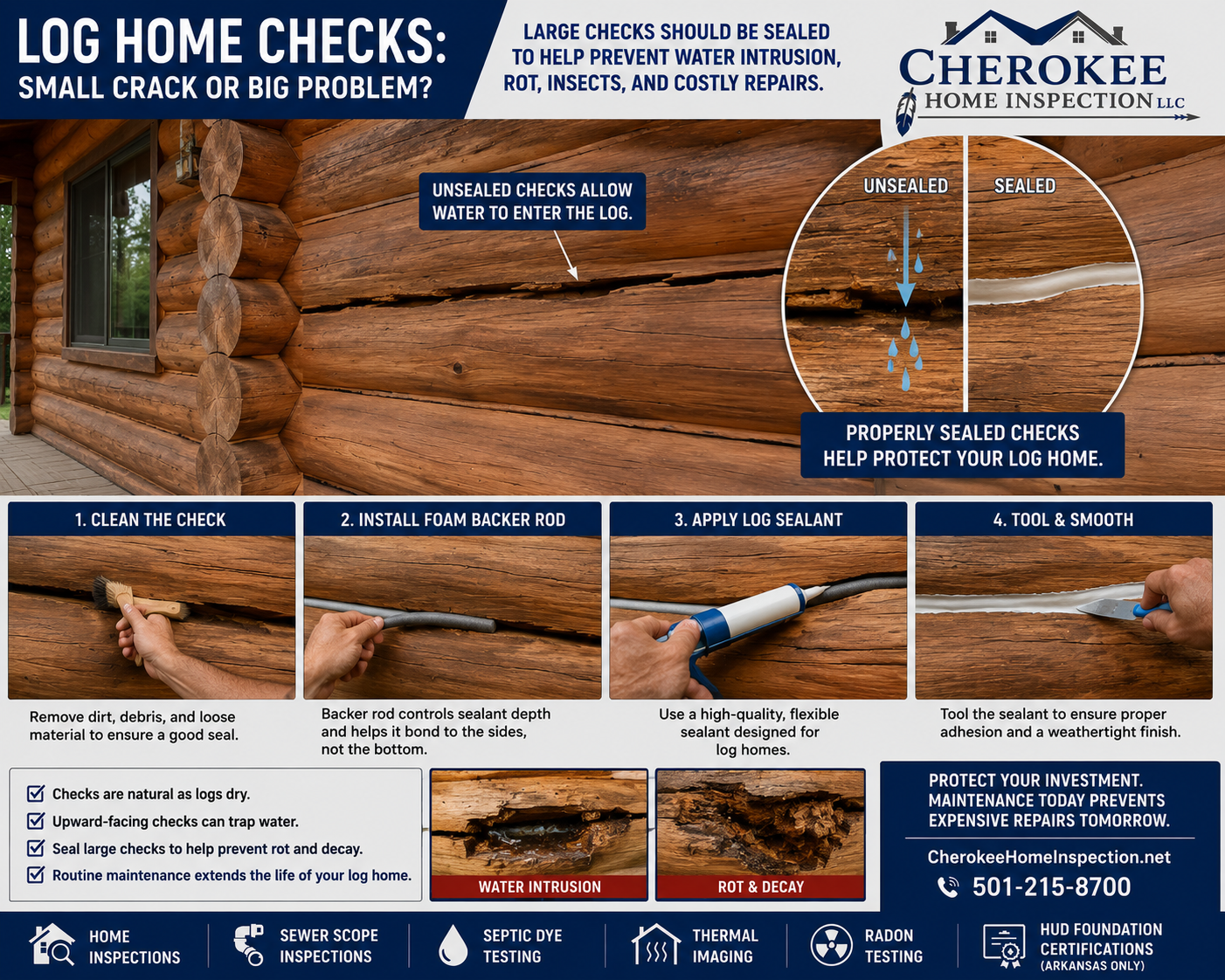
In many cases, checking is a natural part of the drying process as logs lose moisture over time. Small checks are common and do not necessarily indicate a structural problem. However, large or improperly maintained checks can allow water to penetrate deep into the log, creating conditions that may lead to serious deterioration.
Why Should Checks Be Filled?
When checks face upward or become large enough to collect water, rain can penetrate into the interior of the log.
Over time, this moisture may contribute to:
- Wood rot.
- Decay.
- Mold and mildew.
- Insect infestation.
- Carpenter bee activity.
- Carpenter ant activity.
- Reduced structural integrity of the log.
Once decay begins inside a log, repairs can become costly and may require partial log replacement.
How Are Checks Properly Repaired?
Not every check requires repair. However, larger upward-facing checks that can trap water should be evaluated and sealed.
Repairs are commonly performed by:
- Cleaning the check to remove dirt and debris.
- Allowing the wood to dry if moisture is present.
- Installing an approved foam backer rod in deeper checks when appropriate.
- Applying a high-quality, flexible log home chinking or log sealant specifically designed for exterior log construction.
Using the proper sealant allows the log to continue expanding and contracting with seasonal moisture changes while helping prevent water intrusion.
Regular Maintenance Is Essential
Log homes require periodic maintenance to maximize their service life.
Homeowners should routinely inspect for:
- New or enlarging checks.
- Failed or cracked sealant.
- Water staining.
- Soft or deteriorated wood.
- Insect damage.
- Areas requiring resealing or refinishing.
Prompt maintenance can significantly extend the life of the logs and reduce the likelihood of expensive repairs.
What Homebuyers Should Know
During a professional home inspection, visible log walls are evaluated for signs of deterioration, excessive checking, moisture intrusion, insect activity, and other conditions that may warrant further evaluation or maintenance.
While checking itself is often a normal characteristic of log homes, checks that allow water to enter the log should not be ignored.
Trust Cherokee Home Inspection LLC
Cherokee Home Inspection LLC has experience inspecting log homes throughout Arkansas and Southern Missouri. We carefully evaluate accessible log walls for moisture intrusion, deterioration, excessive checking, and other conditions that could affect the home's performance and longevity.
Understanding the condition of a log home today can help prevent expensive repairs tomorrow.
Schedule your professional log home inspection with Cherokee Home Inspection LLC today.


Serving Cherokee Village, Hardy, Ash Flat, Evening Shade, Cave City, and surrounding area.