-
Why Your Water Heater Temperature Matters: Too Cold Can Promote Bacteria, Too Hot Can Cause Serious Burns
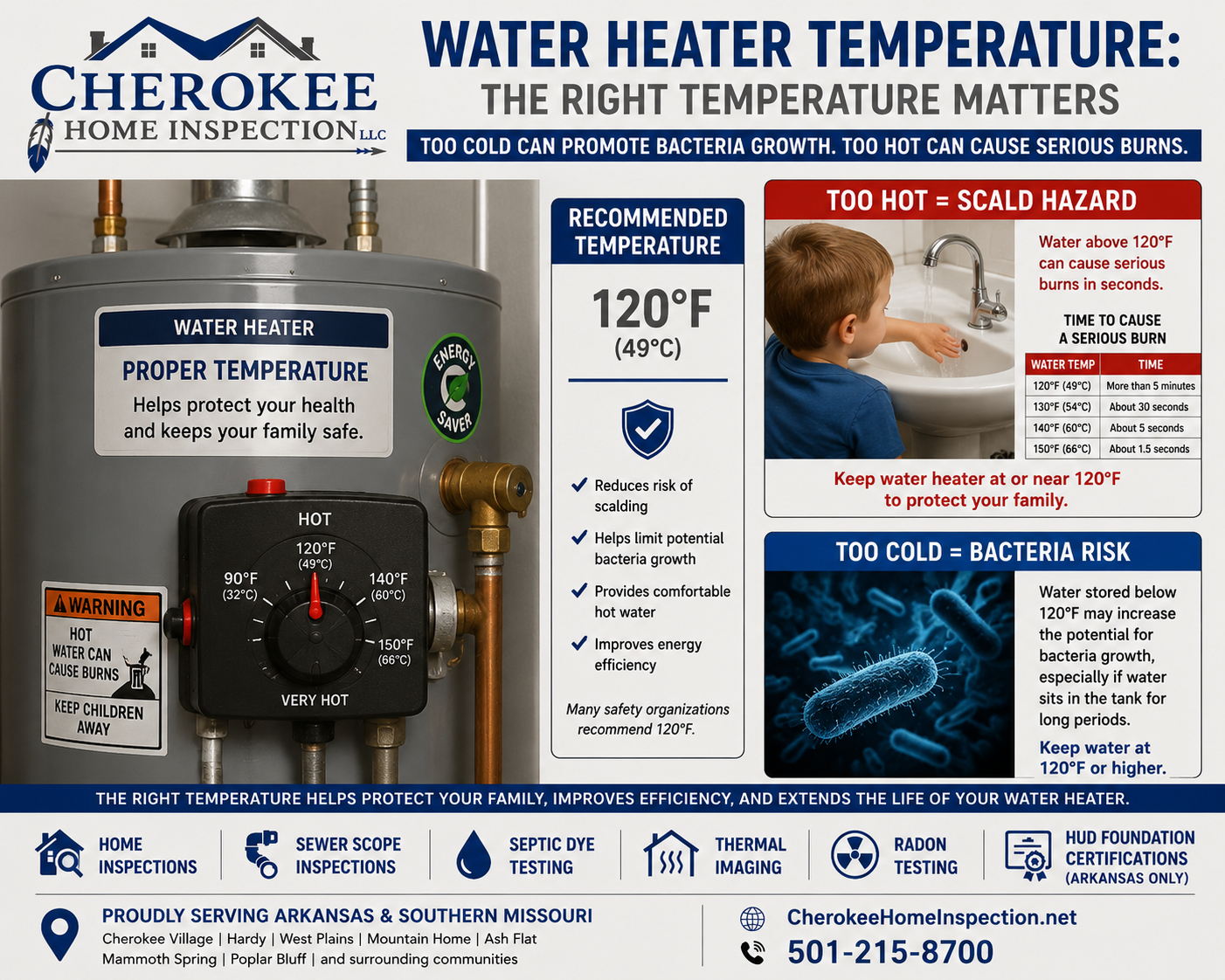
Why Your Water Heater Temperature Matters: Too Cold Can Promote Bacteria, Too Hot Can Cause Serious Burns
Your Water Heater Does More Than Provide Hot Water
Many homeowners never think about the temperature setting on their water heater. However, setting the temperature too low or too high can create problems ranging from bacterial growth to serious scald injuries.
Finding the proper balance is important for both safety and water quality.
Water That's Too Cool May Allow Bacteria Growth
When water is stored at temperatures that are too low, certain bacteria—including Legionella, the bacteria associated with Legionnaires' disease—can multiply inside the water heater and plumbing system.
Water temperatures below approximately 120°F (49°C) may increase the potential for bacterial growth, particularly if water remains stagnant in the tank for extended periods.
Maintaining the proper water heater temperature helps reduce the conditions that allow bacteria to multiply while still providing comfortable hot water for everyday use.
Water That's Too Hot Can Cause Serious Burns
Water that is excessively hot presents a significant scald hazard. Young children, older adults, and individuals with limited mobility are especially vulnerable because their skin burns much more quickly than healthy adults.
Water temperatures above 120°F (49°C) can cause serious burns in just a few seconds. As the temperature increases, the amount of time required to cause severe burns decreases dramatically. Water near 140°F (60°C) can cause serious burns in only a few seconds.
Finding the Right Balance
Many safety organizations recommend maintaining residential water heaters at approximately 120°F (49°C). This temperature provides a good balance between:
Helping reduce the conditions that allow bacteria to grow.
Reducing the risk of scald injuries.
Providing comfortable hot water.
Improving energy efficiency.
Some homes may be designed to store water at higher temperatures when equipped with properly installed mixing or tempering valves that reduce the water temperature delivered to faucets and showers.
What Homebuyers Should Know
During a home inspection, the water heater is visually inspected for its overall condition and operation. Although inspectors may measure the temperature of hot water delivered at a plumbing fixture, a home inspection is not intended to verify thermostat calibration or evaluate water quality.
If the water appears excessively hot or unusually cool, further evaluation or adjustment by a qualified plumbing contractor may be recommended.
Trust Cherokee Home Inspection LLC
Cherokee Home Inspection LLC carefully evaluates accessible water heaters as part of every home inspection. We inspect the visible condition, operation, safety features, and report conditions that may warrant further evaluation.
Understanding the condition of your water heater helps protect your family from unnecessary safety risks while giving you confidence in one of your home's most important systems.
Schedule your professional home inspection with Cherokee Home Inspection LLC today and buy with confidence.


Serving Cherokee Village, Hardy, Ash Flat, Evening Shade, Cave City, and surrounding area.